A Hoag grateful patient experiences an extraordinary recovery prompting researchers to ask what’s possible in brain cancer care.
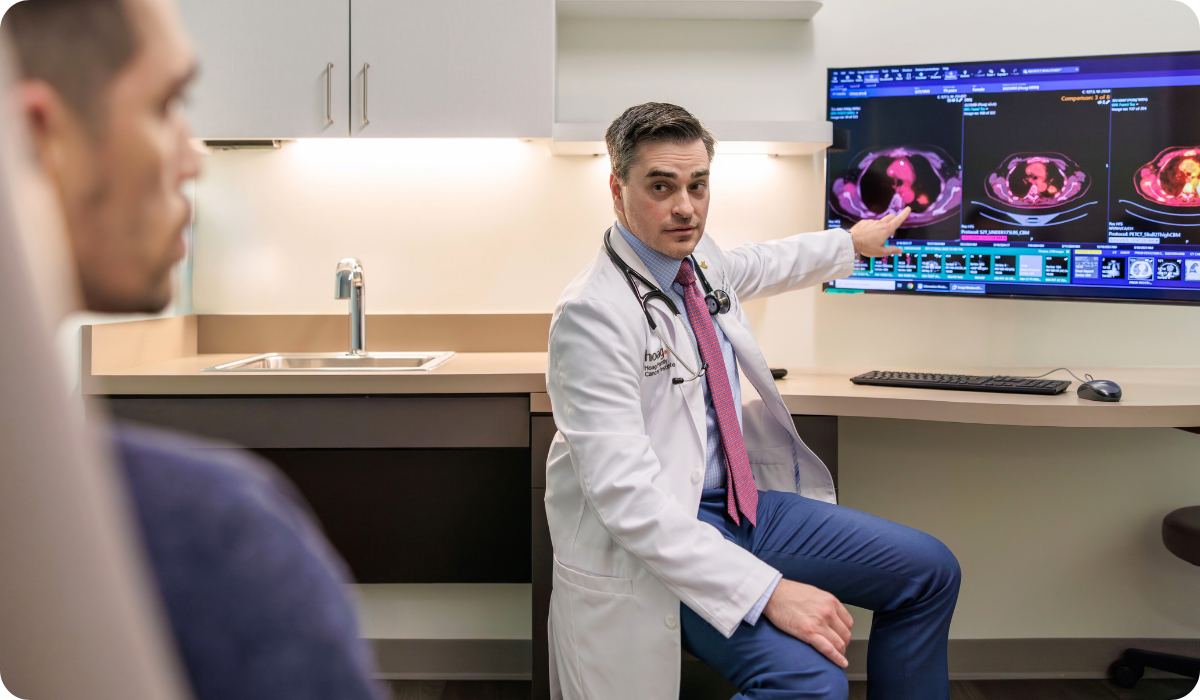
Simon Khagi, MD, MBA, FACP, Melinda Hoag Smith Endowed Chair in Neurological Oncology at the Hoag Family Cancer Institute
For patients diagnosed with glioblastoma, the most aggressive form of primary brain cancer, the statistics are sobering. Even with surgery, radiation, and chemotherapy, median survival is typically 12 to 15 months, recurrence is nearly universal, and fewer than 5% of patients are alive five years after diagnosis. For older adults, outcomes are even more challenging.
Against that backdrop, one patient’s remarkable experience at Hoag is helping inspire new questions about what may be possible.
The story is about what can happen when visionary philanthropy, multidisciplinary collaboration, and clinical research come together to create opportunities that otherwise would not exist.
At the center of that work is Simon Khagi, MD, MBA, FACP, Melinda Hoag Smith Endowed Chair in Neurological Oncology at the Hoag Family Cancer Institute.
“Every patient diagnosed with a brain tumor deserves the opportunity to participate in potentially life-saving clinical research,” said Dr. Khagi. “Our responsibility is to continue creating more options for patients who urgently need them.”
A Remarkable Observation
After an initial craniotomy and subsequent treatment failed to stop the progression of Clifford Styles’ glioblastoma, the patient, in his late 70s, volunteered to participate in a clinical study evaluating MRI-guided focused ultrasound.
The study was not designed to treat his cancer.
Instead, investigators temporarily opened the blood-brain barrier using focused ultrasound to determine whether tumor biomarkers, normally trapped inside the brain, could be detected through a simple blood draw. Researchers hoped those biomarkers might someday improve diagnosis, treatment selection, and disease monitoring for future patients.
Styles understood there was no anticipated therapeutic benefit.
“I thought, if it didn’t help me, maybe it would help somebody else,” he said. “Research has to start somewhere.”
Following participation in the study and subsequent surgery to remove the recurrent tumor, his recovery took an unexpected course.
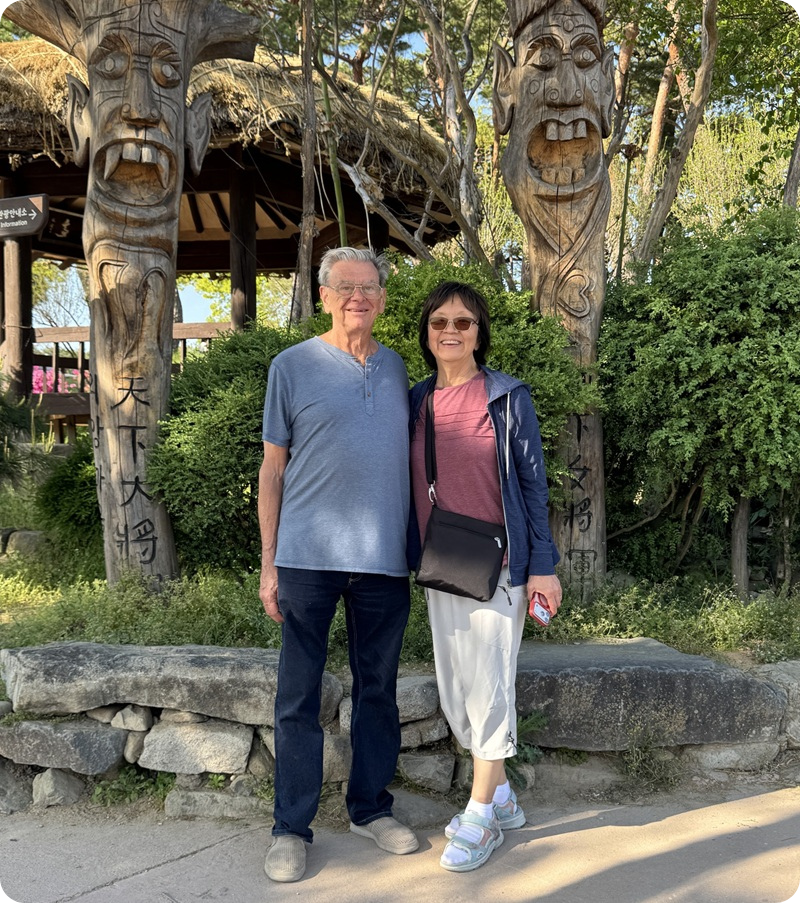
More than 15 months later, his MRI scans continue to show no evidence of disease progression. He has required no additional treatment and has returned to normal life, traveling together with his wife Sun-Joo, with recent trips to New York, Canada, Paris, and South Korea.
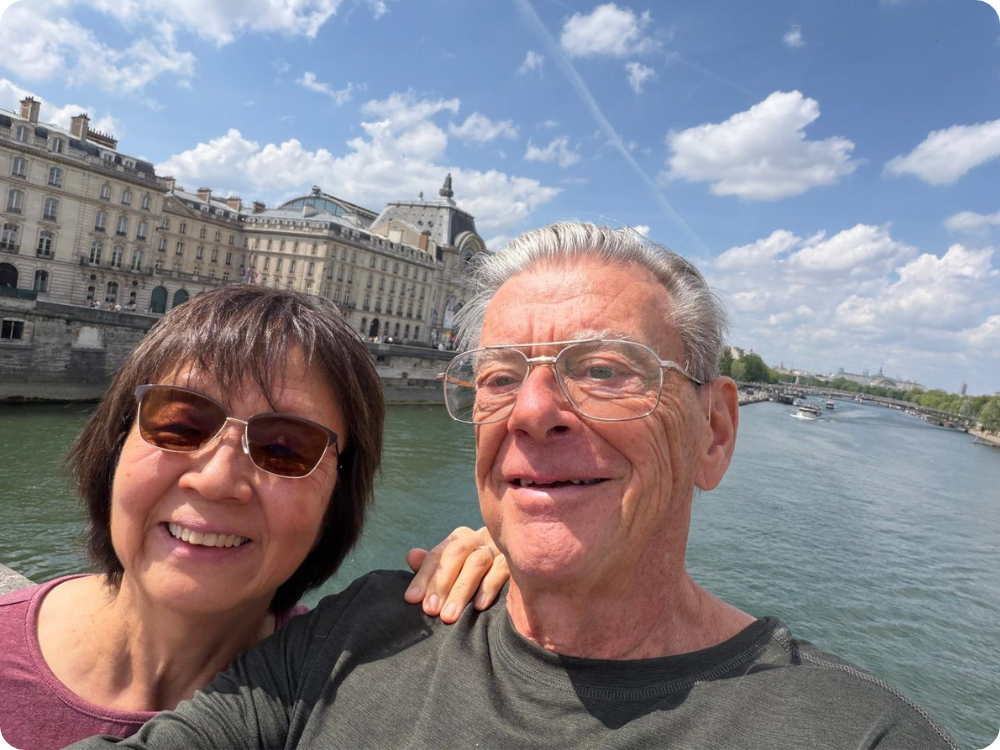
Clifford and Sun-Joo Styles
For Dr. Khagi, the experience represents one of the more extraordinary outcomes he has encountered in his career.
“This is not evidence that focused ultrasound cured the patient’s cancer,” he emphasized. “But it is an observation we cannot ignore. It raises important scientific questions that deserve further investigation.”
Dr. Khagi believes temporarily opening the blood-brain barrier may do more than improve access to biomarkers. It may also alter the tumor’s immune environment or improve delivery of therapies into the brain—possibilities that could reshape future treatment strategies.
Building on these findings, Dr. Khagi is planning to leverage endowed chair philanthropic funds to pursue the next generation of focused ultrasound research, exploring its potential in combination with immunotherapy, cell therapy, and other emerging treatments.
“We’re grateful there are people willing to support research and innovation at Hoag,” Styles said. “Without that support, this technology would not be available.”
A Team United Around Innovation
The focused ultrasound study reflected the close partnership between the Hoag Family Cancer Institute and Hoag’s Pickup Family Neurosciences Institute.
Dr. Khagi served as principal investigator of the study while neurosurgeon Robert Louis, MD, FAANS, Empower360 Endowed Chair in Skull Base and Minimally Invasive Neurosurgery, performed the patient’s procedure and partnered in advancing Hoag's focused ultrasound program.
This astounding technology is guided by MRI as hundreds of ultrasound transducers precisely direct sound waves through the skull, temporarily and noninvasively opening the blood-brain barrier without an incision. Throughout the procedure, physicians monitor treatment in real time to ensure both precision and safety.
But technology alone is not enough.
Its successful application depends on seamless coordination among neuro-oncology, neurosurgery, neuroradiology, clinical research teams, imaging specialists, nurses, and technical staff.
“Advances like these don’t happen because of one physician,” said Dr. Khagi. “They happen because you bring together experts across multiple disciplines who share the same goal of giving patients access to opportunities they may not find anywhere else.”
From One Study to New Opportunities
Hoag joined the focused ultrasound biomarker study in late 2024, becoming one of only 17 sites nationwide selected to participate.
Despite having only a brief enrollment window before the study closed, the team successfully enrolled two patients in approximately two months, a pace that exceeded many participating institutions.
Dr. Khagi credits Hoag’s highly engaged research infrastructure, efficient communication, and ability to move quickly when promising opportunities emerge.
That success has already created momentum.
Hoag has since been invited to help shape the next generation of focused ultrasound research, with new opportunities to explore how temporarily opening the blood-brain barrier may improve delivery of emerging therapies for brain tumors.
Although these initiatives remain in development, they illustrate a larger commitment to ensuring patients, including older adults who have historically been underrepresented in clinical trials, have access to innovative research close to home.
Philanthropy Makes Discovery Possible
This remarkable outcome reflects the strength of Hoag’s unique privademic model, which combines the innovation and research capabilities of an academic medical center with the agility and personalized care of a leading private health system. Philanthropy empowers this unique approach. Focused ultrasound technology came to Hoag in part through philanthropic support from Hoag Innovators, a community of philanthropists, entrepreneurs, and visionaries committed to accelerating medical innovation at Hoag.
That investment made it possible to acquire the technology, but even more importantly, to explore entirely new applications through clinical research.
For Dr. Khagi, that distinction is critical.
“Philanthropy doesn’t simply help us purchase new technology,” he said. “It gives us the freedom to ask bigger questions, launch innovative research, and discover what’s possible for patients.”
Today, one extraordinary patient outcome is helping guide those questions.
Tomorrow, the answers may help change the future of brain cancer care.
To learn more about how you can make an impact on research, innovation, and cancer care at Hoag, contact Executive Director of Development Heidi Saravia at the Hoag Hospital Foundation at Heidi.Saravia@hoag.org or 949.764.7238.